
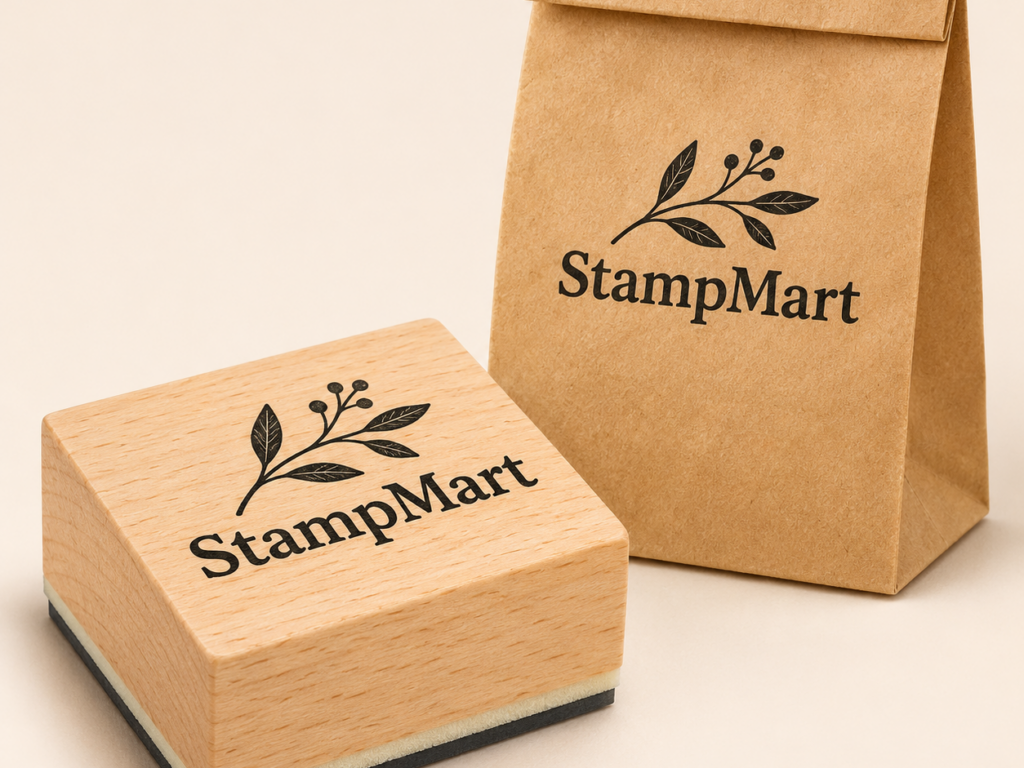
One logo stamp, three ways to brand kraft packaging
A paper bag, a folding carton and a small swing tag can carry the same logo stamp. The trick is to design for the smallest piece first. A mark that reads clearly on a tag can hold its own on a much larger bag if you give it some space.
See the stamps on packaging
Start with the tag
Cut a piece of scrap paper to the size of your smallest tag. Sketch the logo inside it or print your artwork at the intended stamp size. Punch the string hole before judging the layout. A border that looks balanced on screen can look cramped once the string is in place.
For a bakery, try the shop name and a simple loaf outline. Put the address or a handwritten flavour on the reverse. Look at the sample at arm’s length. If you have to bring it closer to read the name, enlarge the lettering or take out a detail before ordering.
Stamp the bag while it is flat
Slide a smooth piece of card inside an empty kraft bag. It gives the stamp a level surface and keeps the handles and folded seams from sitting directly under the design. Try the logo in the lower corner, then make a second sample with the logo centred. Fill both bags and compare them standing up. A mark that looked centred on the flat bag may sit too low once the base opens.
Give the carton a repeatable position
For a folding carton, stamp the blank before assembling it. Fold one sample first so you can mark which panel faces the customer and which way is up. For a small batch, place the flat blanks against the same corner of your work surface. A paper guide along one edge helps keep the logo in the same spot on each lid.
Test the ink on the actual packaging
A wooden logo stamp uses a separate ink pad. Press straight down on a packaging offcut and lift straight up. Let the impression dry, then rub it lightly with a clean scrap. If it transfers, hold the batch and check that the ink suits that surface. A coated carton can behave quite differently from an uncoated kraft bag.
Keep one approved tag, bag and carton beside the packing table. They give the next person a reference for position, orientation and ink coverage, even when the three pieces are packed on different days.
About Author

You Might Also Like This
Comments are closed.